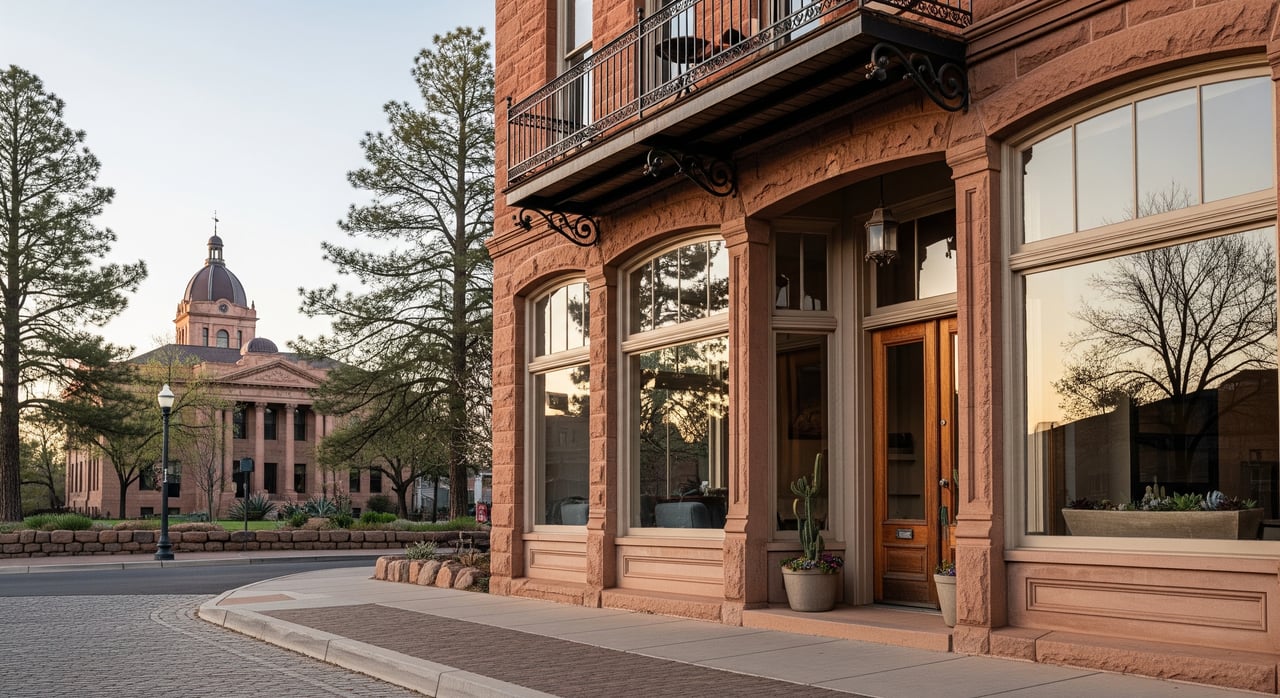
Ever picture your day starting with coffee on the Courthouse Plaza, errands on foot, and sunset music a short stroll from home? If downtown Prescott has been on your radar, you likely value character, convenience, and community energy. You also want a realistic feel for parking, noise, housing, and outdoor access. Here’s a grounded guide to living around the Plaza and Whiskey Row, with practical tips to help you decide if it fits your lifestyle. Let’s dive in.
Downtown Prescott at a glance
Downtown centers on the Yavapai County Courthouse Plaza and historic Whiskey Row. The district reflects Prescott’s late 19th and early 20th century roots with preserved buildings and a compact street grid. You’ll feel a small-city rhythm, with a mix of local businesses, civic activity, and a visitor-friendly main street.
Compared with rural parts of Yavapai County, the pace here is livelier during the day and on event nights. Compared with large Arizona cities, the scale is intimate and easy to navigate. You get walkable access to dining, galleries, shops, and a steady calendar of concerts and seasonal festivals.
Day-to-day living
Walkability and errands
Most daily needs cluster near the Plaza. Coffee, casual meals, boutique shopping, banking, and municipal services are within a few blocks. Grocery runs often mean a short drive to larger markets just outside the core, though small specialty shops serve quick top-ups.
Dining and shopping
You’ll find a range of locally owned restaurants, cafés, and pubs, including Whiskey Row’s historic bar scene. Galleries and gift shops punctuate the side streets. Weekdays feel relaxed, while weekends and event days bring more foot traffic and late-night energy.
Healthcare and services
Downtown residents benefit from nearby clinics and regional care through Yavapai Regional Medical Center, along with pharmacies and small professional practices. City and county offices handle utilities, permitting, and property records, and are easy to reach from the core.
Nightlife and noise
Evenings stay active near Whiskey Row and the Plaza, especially during festivals and live music series. If you’re sensitive to sound, consider a home on quieter side streets or properties set a few blocks off the main corridors. A smart move is to visit potential homes at night to get a feel for typical noise levels.
Getting around and parking
Street parking basics
Parking downtown includes a mix of time-limited street spaces and small public lots. It’s generally straightforward on regular days and tighter during events. If you plan to host guests often, confirm nearby parking options and any permit rules before you buy.
Transit and regional travel
Prescott’s public transit is limited compared with larger metro areas, so most residents rely on cars. Phoenix, Flagstaff, and Sedona are reachable by highway, and a regional airport serves the area with varying commercial service. If you expect routine commuting to Phoenix, factor in drive times and seasonal road conditions.
Housing types and market feel
Home styles and lot sizes
You’ll see historic single-family homes, early 20th century cottages, and classic Victorian-era architecture. Lots are smaller than in suburban or rural parts of Yavapai County, which means less yard work and more time in the Plaza. Off-street parking and garages can be limited, so verify driveway access and on-site storage.
Condos, lofts, and rentals
Downtown living also includes condos, lofts over shops, and small apartment buildings. These can offer lower maintenance and excellent access to amenities. Some buildings include HOA or condo fees that cover exterior care and shared spaces, so include those in your monthly budget.
Historic rules and renovations
If a property sits in a designated historic district, exterior changes may be reviewed by the City’s Historic Preservation Office. Expect guidelines for materials and design. Older homes can need updates for plumbing, wiring, or foundations, so plan thorough inspections and a renovation budget that respects preservation standards.
Short-term rentals: rules to verify
Visitor traffic makes downtown appealing for second homes and potential short-term rentals. Regulations, lodging taxes, and HOA rules can shape what is allowed. Before you buy for rental income, confirm current city and county policies and any building-specific restrictions.
Outdoor access minutes away
Nearby lakes and trails
Living downtown keeps you close to the Granite Dells and Watson Lake for hiking, kayaking, and photography. Thumb Butte offers a quick out-and-back hike with views, and Lynx Lake provides shaded trails and picnic spots. Trailheads in Prescott National Forest are an easy drive for weekend adventures.
Seasonal considerations
Summer weather is generally milder than Arizona’s lower deserts, while winter can bring chillier days and occasional freezes. Wildfire season varies year to year, which can affect trail access and fire restrictions. Check local advisories before heading out and consider defensible-space practices if your property is near vegetated areas.
Who downtown fits
Downtown works well if you:
- Want walkable access to dining, events, and services.
- Prefer character homes or low-maintenance condos over large yards.
- Enjoy community energy and live music within a short stroll.
You might look farther out if you:
- Need a large yard or wider privacy buffers.
- Prefer consistently quiet nights with minimal event traffic.
- Commute daily to Phoenix and want faster freeway access.
Smart buyer tips
- Tour at different times. Visit on a weekday, a weekend, and an event night to compare traffic, noise, and parking.
- Map your daily routine. Identify your top three errands and see if you can walk to them. Note where you’ll grocery shop and how long that drive takes.
- Confirm parking and storage. Ask about on-site spaces, street rules, guest parking, and options for gear or bikes.
- Budget for maintenance. Historic homes can need specialized repairs. Build an inspection list that covers electrical, plumbing, foundation, and roof.
- Check rules and fees. Verify HOA or condo fees, short-term rental policies, and any historic-district design guidelines before you offer.
- Review insurance details. Older construction, roof age, and proximity to vegetation can affect premiums. Talk with a local insurance agent.
Living here, day in and day out
Life in Prescott’s historic downtown blends small-town charm with real convenience. You can step out your door for a morning walk under shady trees, grab lunch on Whiskey Row, and catch an evening concert on the Plaza. On quieter days, you’ll still feel close to nature with lakes and trailheads nearby. The trade-off is smaller lots and occasional event bustle, which many residents consider a fair exchange for the walkable lifestyle.
If you’re considering a move, partnering with a local guide makes the process smoother. A concierge-style team can flag renovation considerations early, confirm parking or HOA details, and help you compare downtown with nearby neighborhoods like Prescott Valley or the forested edges of town.
Ready to explore homes that match your pace, budget, and wish list around the Plaza? Let’s talk about your goals with Rockman Homes.
FAQs
Is downtown Prescott walkable for daily needs?
- Yes. Many cafés, restaurants, shops, and civic services cluster around the Courthouse Plaza, while larger-format groceries are a short drive away.
How noisy is Whiskey Row at night?
- Nightlife and event noise concentrate near Whiskey Row and the Plaza. Tour target properties in the evening to gauge sound levels and consider homes on quieter side streets.
What is parking like in the historic core?
- Expect time-limited street spaces and small public lots, with tighter conditions during events. Confirm on-site parking, guest options, and any permits for your block.
Are there rules for renovating historic homes?
- Properties in designated districts often have design review for exterior work. Check city guidelines, plan for appropriate materials, and build in time for approvals.
Can I operate a short-term rental downtown?
- It depends on current city and county rules, lodging taxes, and building or HOA restrictions. Verify all requirements before purchasing for rental income.
How does downtown pricing compare to outlying areas?
- Downtown often commands a premium for location and historic character. Compare current listings and trends with nearby neighborhoods to understand trade-offs.