If you picture Prescott as all courthouse square charm and in-town neighborhoods, Potato Patch may surprise you. This small mountain community south of Prescott feels more like a forest retreat, with rustic cabins, wooded lots, and a lifestyle shaped by elevation, nature, and seasonal access. If you are dreaming about a cabin getaway, a second home, or a quieter place to land in Yavapai County, this guide will help you understand what makes Potato Patch different and what to look for before you buy. Let’s dive in.
Why Potato Patch Feels Like Cabin Country
Potato Patch is an unincorporated community in Yavapai County, south of Prescott. Public community materials describe it as a high-country neighborhood surrounded by Prescott National Forest, which helps explain why the area feels tucked away and outdoorsy rather than suburban.
Elevation plays a big role in that feel. A topo listing places Potato Patch at about 6,975 feet, while Prescott’s NOAA climate station sits at 5,205 feet. That higher setting helps explain why many buyers experience Potato Patch as cooler, more mountain-like, and more like a true cabin environment than town.
The setting also shapes the pace of life. The community points residents toward wildfire preparedness, evacuation information, forest resources, and wildlife guidance, which reflects the realities of living at the forest edge. In other words, cabin life here is not just about the look of the home. It is also about being prepared for the land and seasons around you.
What Homes in Potato Patch Look Like
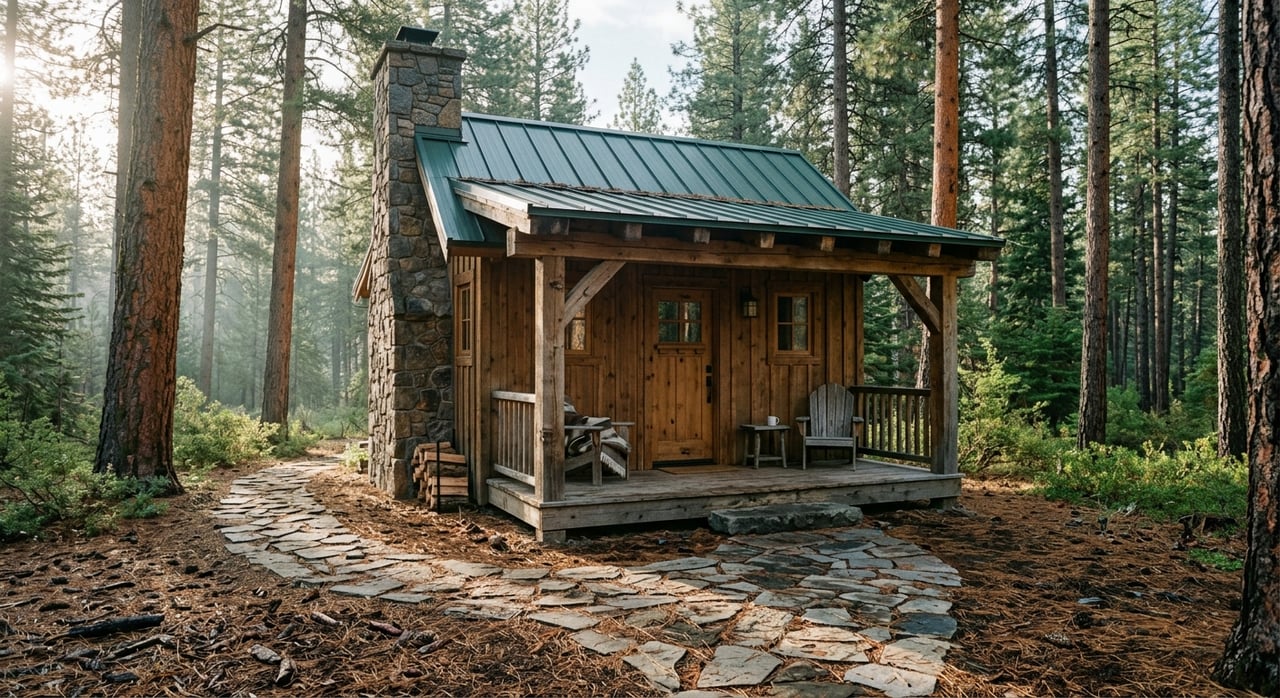
If you are searching for cabin life in Prescott’s Potato Patch community, the housing stock has a very clear personality. Current listing examples show recurring features like A-frame or rustic cabin designs, knotty pine interiors, lofts, decks, wood-burning stoves, metal roofs, and extra storage or workshop space.
You may also find guest quarters or smaller wooded lots that lean into the mountain-cabin feel. Some parcels appear to be buy-and-build or lightly improved lots rather than standard move-in-ready homes. One lot listing noted power availability and a community water meter, which is a helpful reminder that not every property here will fit the same use or timeline.
This is part of Potato Patch’s appeal. Instead of a uniform subdivision, you are looking at a mix of cabins, mountain retreats, and parcels with varying levels of improvement. That can create opportunity, but it also means you will want to look closely at each property’s access, utilities, and improvement status.
The Lifestyle Buyers Come Here For
Potato Patch is often marketed as a mountain escape, and the details support that positioning. Listing patterns mention year-round access off county-maintained roads, proximity to the community park, and homes that back to Prescott National Forest.
That makes the community especially appealing if you want a place that feels connected to the outdoors. Decks, wooded views, and simple cabin layouts tend to support a slower, more recreational lifestyle. For many buyers, that is the point.
Based on the available data, Potato Patch is likely a strong fit for second-home buyers, weekend travelers, or downsizers who want a cool, forested Arizona getaway. The private water system is described in an Arizona Corporation Commission valuation as serving about 132 lots with 87 active connections and being used primarily for vacation and summer recreation. That utility profile strongly suggests a seasonal-use market rather than a typical full-time suburban pattern.
Access and Winter Conditions Matter
One of the most important things to understand about cabin life here is access. Yavapai County says it maintains only county-maintained roads, can provide snow removal only on those roads, and does not clean or maintain driveway culverts.
That means road classification matters. Before you buy, the county advises verifying whether a road is public and maintained using the parcel number. In a higher-elevation mountain community, that is not a small detail. It can affect winter access, seasonal convenience, and how comfortable you feel using the property year-round.
Prescott’s official 1991 to 2020 climate normals show annual precipitation of 16.46 inches and annual snowfall of 10.2 inches at the town station, with measurable snowfall in winter months. Because Potato Patch sits higher than that station, winter conditions in the community are likely more pronounced, although that is an inference from the elevation difference rather than a direct climate record for the neighborhood itself.
Utilities and Infrastructure to Check Early
In many neighborhoods, utilities are easy to assume. In Potato Patch, it is smarter to confirm details early in the process. The community water system is private, and the Arizona Corporation Commission valuation says the system draws from a well located in the community park.
That same valuation notes about 132 lots and 87 active connections. For buyers, that is a practical signal that infrastructure here may feel different from a conventional city neighborhood. Water service, lot status, septic needs, and property improvements should all be reviewed property by property.
Yavapai County’s Development FAQ points buyers to county permitting for septic, wells, setbacks, and building code compliance. If you are thinking about remodeling a cabin, adding space, or buying a lot to build on, those site-specific permits are central to what may be possible.
HOA and Community Rules to Review
Potato Patch has an active HOA or owners corporation with published CC&Rs, bylaws, and filed rules and regulations. The community mission emphasizes living in harmony with nature and protecting the forest, which fits the area’s cabin setting and forest-edge lifestyle.
Buyers should plan on reading the governing documents carefully. The recorded declaration defines an Association, Association Rules, a Board, and a Building Committee. While that does not confirm every specific restriction, it does suggest there is a real approval structure for at least some exterior or community-related issues.
That matters if you are considering changes to a home or lot. Before assuming you can add a deck, change exterior materials, adjust parking, or expand use of the property, it is wise to verify what the community documents and county requirements allow.
The HOA’s construction history also notes a community fire garage completed in 2020 after a vote and special assessment. That detail says a lot about how seriously the neighborhood treats emergency response and preparedness in a forest setting.
Can You Use a Cabin as a Short-Term Rental?
This is a common question, especially in a destination-style area. Yavapai County says short-term rental of permitted habitable structures is allowed as of January 1, 2017, but not in travel trailers, RVs, tents, yurts, gazebos, teepees, sheds, garages, barns, caves, offices, or other non-permitted sleeping structures.
The county also says short-term rentals do not allow weddings, parties, specialized retreats, or other commercial activities. So if you are considering Airbnb-style use, the first step is making sure the structure itself is permitted and habitable under county rules.
The second step is checking HOA restrictions. County rules and community rules are not the same thing, and both matter. In a place like Potato Patch, where the neighborhood identity is closely tied to preservation and forest living, it is especially important to confirm the full picture before you buy.
How Potato Patch Fits the Bigger Market
Potato Patch is a niche within the broader Prescott-area market. It does not read like a standard in-town home search. Instead, it appeals to buyers who value rustic character, wooded surroundings, and a getaway feel.
For context, Yavapai County’s median single-family home sales price for 2025 was $550,000, while Prescott’s was $636,195. Those figures are only directional for Potato Patch, but they can still help if you are comparing a cabin purchase against other options in the county or in Prescott proper.
The bigger takeaway is this: value in Potato Patch is not only about square footage. It is also about setting, access, utility setup, forest adjacency, and whether the property fits your intended use. That is why cabin buying here benefits from a local, detail-oriented approach.
What to Look for Before You Buy
If Potato Patch is on your radar, focus on the details that can shape day-to-day ownership.
- Confirm whether the road to the property is county-maintained
- Ask about winter access and driveway conditions
- Verify water service details and whether the lot is connected
- Check for septic, well, setback, and permit history where relevant
- Review HOA CC&Rs, bylaws, and any rules that affect exterior changes or use
- Confirm whether the property is a full-time home, seasonal cabin, or buildable lot
- If rental use matters to you, verify both county and HOA rules
These steps can help you avoid surprises and better match the property to your goals. A charming cabin is only part of the equation. The practical side of ownership matters just as much.
If you are exploring cabin life in Prescott’s Potato Patch community, local guidance can make the process much smoother. From reviewing access and utility details to helping you compare a seasonal retreat against other Prescott-area options, Rockman Homes is here to help you make a confident move.
FAQs
What is Potato Patch near Prescott, Arizona?
- Potato Patch is an unincorporated Yavapai County community south of Prescott, described by the HOA as a high-country neighborhood surrounded by Prescott National Forest.
What kinds of homes are common in Prescott’s Potato Patch community?
- Current listing examples commonly feature rustic cabins, A-frames, knotty pine interiors, lofts, decks, wood-burning stoves, metal roofs, and wooded lots.
Is Potato Patch mainly a full-time neighborhood or a seasonal cabin area?
- The private water system serves about 132 lots with 87 active connections and is described in an Arizona Corporation Commission valuation as used primarily for vacation and summer recreation, which points to a strong seasonal-use pattern.
What should buyers know about roads in Potato Patch?
- Yavapai County maintains only county-maintained roads, offers snow removal only on those roads, and advises buyers to verify road status by parcel number before purchasing.
Can you use a Potato Patch cabin as a short-term rental?
- Yavapai County allows short-term rental of permitted habitable structures, but buyers should also confirm HOA restrictions and note that certain commercial activities and non-permitted sleeping structures are not allowed.
Why does Potato Patch feel cooler than Prescott?
- Potato Patch sits at about 6,975 feet, while Prescott’s NOAA climate station is at 5,205 feet, so the community’s higher elevation likely contributes to a cooler, more mountain-like feel.